African American Literature Discussion Group

Book discussion blog for the Evanston Public Library featuring books by or about African Americans, book reviews, author biographies, reader's advisory, and book discussion guides.

Monday, March 20, 2017

Twin Traumas: War and Slavery

The Civil War era, with its 750,000 dead saw a heightened interest in spiritualism and mysticism. In 1861, a spiritualist newspaper appeared called the “Banner of Light” and according to Civil War Talk, 

"The Banner of Light proposed to seek out dead soldiers to find out how they were doing after death, what conditions they were in when they died, and whether they died the “good death.”

Each issue of the newspaper provided a litany of answers from dead soldiers in a monthly article known as “Voices from the Dead.”. A Mrs. Conant would go into a trance and seek out dead soldiers on both sides.

Some of the dead channeled Mrs Conant with things like, “as a favor of you today, that you will inform my father, Nathaniel Thompson of Montgomery, Alabama, if possible, of my decease. Tell him I died …eight days ago, happy and resigned.”

Leonard Bolton wants to give my mother …”a little sketch of the manner of my death.”

Charlie Hiland reported, “I lost my life in your Bull Run affair, and the folks want to know how I died and what became of me after death… I should like to inform them.”

None of the soldiers mentioned were real soldier’s names. The Banner of Light did not present any reader’s actual kin, or any real details. The newspaper lasted well into mid-1870s."

Source: “The Republic of Suffering: Death and the American Civil War” – Drew Gilpin Faust

Sounds very similar to Sadie's experiences in Balm, doesn't it?

While spiritualism was extremely popular among whites, there is less of a record on its following among African Americans. Yet they too were experiencing traumatic separations, as plantations were disbanded, and slaves either escaped, were sold away or were taken up by Union regiments. Like Hemp, many slaves had no way of tracing what had become of their loved ones.

By juxtaposing the experiences of Sadie, the white widow trapped into channeling the spirit of a dead Union soldier, and Hemp, a displaced former slave, Dolen Perkins-Valdez skillfully links these twin traumas, and highlights the unrecognized and untold suffering of fractured African American families. 

Please join us for our discussion of Balm this Tuesday March 21st, 7 pm at the Gibbs-Morrison Cultural Center at 1823 Church St in Evanston. Copies of Balm are held at the 2nd floor desk of the Evanston Public Library.

Posted by Lesley Williams at 10:02 AM 1 comment:
Email ThisBlogThis!Share to XShare to FacebookShare to Pinterest

Sunday, February 19, 2017

"Playing the Race Card" in Detroit?


This Tuesday, 7:00 pm at the Gibbs-Morrison Cultural Center,  we'll be discussing Detroit: an Autopsy, journalist Charlie LeDuff's look at the crumbling infrastructure and hopeless corruption that continues to plague the Motor City. This may seem an odd choice for an African American literature book group, since the author is white, and much of the book's sympathies lie with white working class families. African Americans tend to be either victims or perpetrators, (note City Council woman Monica Conyers absurd argument with a 13 year old, shown in the video below) p 69.

While LeDuff focuses much of his anger on callous Wall Street and automobile executives,  he accuses former mayor Kwame Kilpatrick of "playing the race card" and sympathizes with a police chief accused of excessive force (and of murdering a 7 year old girl),: "Citizens were complaining that the police were too tough, but at least they were alive to complain"(p 281) . LeDuff also opines that "Factory work tends to give you perspective on the importance of things. Of course in the hip-hop world, work was for suckers" ( p145). Then there's his less than evenhanded description of the Black Muslim brotherhood (p 229).

So is LeDuff a racist, or at best an apologist for racism? What did you find valuable or insightful abut this version of the fall of Detroit? What part of the picture is he missing?

For some other critical examinations of what went wrong, take a look at the article Motor City Breakdown, an excellent review of recent fiction, nonfiction and film about Detroit. I'll be interested to hear your reactions at our meeting this Tuesday!


Posted by Lesley Williams at 10:06 AM No comments:
Email ThisBlogThis!Share to XShare to FacebookShare to Pinterest

Monday, January 9, 2017

Revisiting Roads Not Taken

Greetings and Happy New Year!

I skipped posting about our November  discussion, Grant Park; but if you haven't read it yet I urge
you to check it out! As the Obama administration comes to an end, this nail-biter of a suspense novel, flashing back to the King assassination in 1968 and forward to Obama's inauguration night triumph in Chicago's Grant park encompasses all the struggles of  our African American half century.

This month we're taking it a bit slower, with Terry McMillan's I Almost Forgot About You. Georgia Young, a 50-something successful optometrist with two grown (sort of) daughters is in a rut. After learning that a former flame has recently died, Georgia decides to sell her home and practice, explore a new career as a designer, and take off on a cross-country train ride, while coincidentally looking up her past loves (including her ex husbands) to see what she has, or has not learned from them. Of course life intervenes, in the form of family crises.

McMillan gave an interview to Code Switch on NPR in which she discusses how Georgia's journey reflects her own, and those of her readers, many of whom have been fans for decades. "Life is a lot of stops and starts, but when you get in your 50s, you see there is a finish line, and I want to go out sliding into home," says McMillan.

Does Georgia's story resonate with you? Join us next Tuesday January 17th for our meeting at the Gibbs-Morrison Center and let's talk! Copies of the book are available at the 2nd floor desk of the Evanston Pubic Library; call 847-448-8620.

Other discussions of African AMerican interest coming up this month:


History Book Discussion Group: The Defender

January 18, 2017  7:00pm

 1703 Orrington Ave. Evanston, IL
Venue Main LibrarySeminar Room
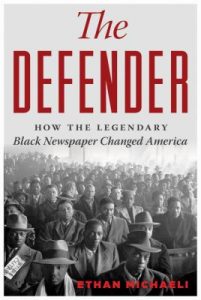
The History Book Discussion Group reads The Defender: How the Legendary Black Newspaper Changed America, by Ethan Michaeli. The story of Chicago’s black paper and its influence throughout the nation, from Teddy Roosevelt’s presidency to Barack Obama’s, which The New York Times called “an extraordinary history. . . deeply researched, elegantly written.”


Science Fiction & Fantasy Book Discussion Group: Kindred

February 1, 2017  7:00pm

Address 1703 Orrington Ave. Evanston, IL
Venue Main LibrarySeminar Room
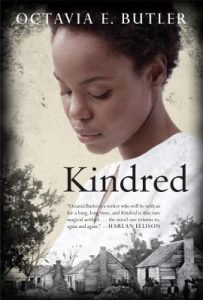
This combination of slave memoir, fantasy, and historical fiction is a cornerstone of black American literature. The novel follows Dana, an African-American woman in 1976, who is suddenly and inexplicably wrenched through time into antebellum Maryland. After saving a white boy from drowning, she realizes the challenge she has been given: to protect this young slaveholder until he can father her own great-grandmother.


African American Literature: Detroit: an American Autopsy

February 21, 2017  7:00pm

Address 1823 Church St. Evanston IL
Venue Gibbs-Morrison Cultural Center
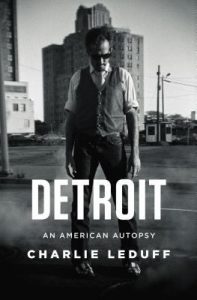
An exposé of Detroit, icon of America’s lost prosperity, from Pulitzer Prize-winning journalist Charlie LeDuff. Back in his broken hometown, LeDuff searches through the ruins for clues to its fate, his family’s, and his own. Once the richest city in America, Detroit is now the nation’s poorest. It is an eerie and angry place of deserted factories and abandoned homes and forgotten people. LeDuff sets out to uncover what destroyed his city, and shares an unbelievable story of a hard town in a rough time filled with some of the strangest and strongest people our country has to offer.


Keepinitreal: The Other Wes Moore

February 28, 2017  7:00pm

Address 1703 Orrington Ave. Evanston, IL
Venue Main LibrarySeminar Room
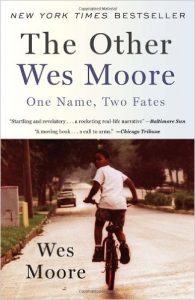
Two kids with the same name were born blocks apart in the same decaying city within a few years of each other. One grew up to be a Rhodes Scholar, army officer, White House Fellow, and business leader. The other is serving a life sentence in prison. Here is the story of two boys and the journey of a generation.
Posted by Lesley Williams at 7:59 AM No comments:
Email ThisBlogThis!Share to XShare to FacebookShare to Pinterest

Monday, October 24, 2016

How "United" Are We?

This is a bittersweet time to be reading Senator Cory Booker's somewhat triumphalist memoir, United, when the US seems more fragmented and divided than ever before, especially around issues of race. Is there really any common ground between say, Trump supporters and the Movement for Black Lives? Has Booker's tenure as a Newark city councilman and then mayor made a significant difference in the lives of the public housing residents he describes so movingly? And what is the role of elected officials in solving entrenched urban nightmares of poverty, drugs and violence? Click below to see Senator Booker respond to these very questions on the Steven Colbert show.

We will be meeting tomorrow night, Tuesday October 25th at our new location, The Gibbs -Morrison Cultural Center , at 1823 Church Street in Evanston (just east of Church and Dodge). There is street parking, and you can also park in the ETHS parking lot. I will be bringing copies of our November 15th book, Grant Park, by Leonard Pitts.

See you then!

Lesley
Posted by Lesley Williams at 9:04 AM No comments:
Email ThisBlogThis!Share to XShare to FacebookShare to Pinterest

Wednesday, September 7, 2016

An Interview with Natalie Moore


Natalie Moore graciously afforded me a brief phone interview to discuss her book The South Side, which we'll be discussing on Tuesday September 20th. Below is an edited transcript of our conversation.


Lesley Williams: In the New York Times article "Affluent and Black and Still Trapped by Segregation,  the authors point out that African Americans of all income levels tend to live in segregated neighborhoods near poverty. Does segregation always equal poverty and lesser resources? Why have other ethnically homogeneous communities managed to thrive when African American ones have not?

Natalie Moore: It’s a race issue not a class issue. That's a point I try to drive home. Unlike other ethnic groups, Black people in Chicago were the ones subjected to restrictive housing policies and laws. They were the ones affected by block busting, redlining, and panic peddling. A great example is Lorraine Hansberry’s family, held back by restrictive covenants in the 1950s. Blacks of all incomes have been affected by these policies, which have reduced Black wealth.


Williams:  Your book brought up many memories for me of growing up in "Pill Hill" a very middle class neighborhood, yet being embarrassed to invite white friends home because of the derelict look of Stony Island: liquor stores, boarded up businesses, "hourly rate motels". Like you, I’ve moved from a primarily Black neighborhood to a more integrated community with more resources. How do you respond to critics who claim we are "traitors" to the Black community, that middle class Black people have an obligation to stay in Englewood, Bronzeville, etc?

Moore: No one has directed that particular criticism to me; it's not something I've had to explain myself over. I think that Black people want to live in multiple places, including the suburbs, just like everyone one else. I lived in Bronzeville for several years until that became economically unfeasible, so I don't think anyone would begrudge me the chance to live elsewhere now.


Williams: I was glad to see you combat  “Jim Crow nostalgia”. I’ve noticed that even younger people, in their 30s look back to an imaginary halcyon childhood when all the neighbors were together, watched out for each other etc. In Evanston, there is a lot of nostalgia for defunct, segregated institutions like the African American YMCA, and there is a movement to bring back a (de facto) segregated school in the historically Black neighborhood. Why do you think this Jim Crow nostalgia is so strong? Has integration failed African Americans, or is it still a worthy goal?


Moore: Segregation was not a good thing, let's be clear. How did integration hurt the Black community? Yes, the Black metropolis had beauty and drive, but the Black Belt also had overcrowded housing and schools. Most of the businesses were not black owned, contrary to popular belief. You might be surrounded by other Black professionals, but maybe you would die because you couldn't get to a hospital that would treat you. The issue is equity and lack of resources, not just people living next to each other.


Williams: A few years ago, our book group discussed Our Black Year, Maggie Anderson's memoir of committing to buy only from Black-owned businesses. Finding Black-owned grocery stores was by far the most difficult commitment, yet she found accessible stores that served African American needs and hired African American employees but were white owned. How important is it that businesses in Black communities be Black owned if they are serving Black residents well? (For example, you mention that white owned grocery chains like Whole Foods are a threat to local Black owned convenience stores, which don't serve healthy food.)


Moore: Because of the lack of economic development it is important for residents to see Black owned businesses, and for those owners to get loans to sustain themselves. But ultimately consumers are looking for the best deals, the best customer service. Non Black owned businesses can be beneficial to Black communities, as long as they are giving back to the community. We need to ask, How are they giving back? Do they have any social investment in the community? Do they treat the community with respect? Black business owners tend to live in the communities where they own stores, non Black business owners are less likely to do so.


Williams: My parents were both public school teachers who sent me to private schools. My friends who live in the city all send their kids to selective enrollment schools. How effective can magnet and selective enrollment programs be when they always skim the children from middle class, college educated families? How does this help the children of the less advantaged?


Moore: We definitely have a tiered system here in Chicago. A lot of families are jockeying to get into those classical selective enrollment schools, yet there are a number of high performing schools on the south side that have zero white enrollment. You'll hear parents say that they want "the best" schools for their children and yet they ignore these schools.

However I'm not interested in attracting white parents to successful Black public schools. I'm more interested in seeing CPS use changing housing patterns to achieve integration. Take a look at WBEZ's piece "How Chicago school construction furthers racial and economic segregation" which points out that new construction is disproportionately going to schools that serve the white, middle class, sometimes ignoring opportunities to create more diverse schools. Richard Kahlenberg, of the bipartisan think tank The Century Foundation states that, "in trying to raise academic achievement, providing an economically integrated environment for students is far more powerful than spending extra resources in high poverty schools". Yet CPS is not looking at opportunities to do so.


Williams:  Steve Bogira presented at the Open Communities justice day about his work bringing high school students from New Trier together with kids from south and west side schools, and how shocked they were by the disparities. Recently a group of African American Chicago kids demonstrated  the inequity by attempting to enroll at New Trier. Do you think that more forthright discussions of these disparities will lead to change? In discussing equity, how do we address  the role of property taxes and school foundations, which guarantee that poorer children will get less per pupil spending than wealthier children in the suburbs?


Moore: Property taxes do play a role of course. We should be having a larger conversation about cities vs suburbs and the equitable division of state and city resources.

But my focus was on segregation. Segregation allows us to know only our default, not the broader community we’re a part of. We don't get to see other parts of our community.When kids see this unfairness it may translate into activism. Why have things stayed the same for so long? Because politicians respond to to what they hear their constituents saying. If more people, like those New Trier and Englewood kids, start demanding more equity, it can happen.


Williams: What would you say to white people who have never been south of Chinatown or Sox park? What are they missing out on?

Moore: I don't want to turn this into cultural tourism, but I would say: You’re missing out on most of the city. The largest geographical part of Chicago is one you have no interaction with. Think about exploring a new neighborhood, cultural institutions, museums, organizations, food, spaces, arts. Get out of your bubble; don't judge everything based on what you hear on the news.


Williams:  Growing up I had white friends in Beverly with relatives in Bridgeport and Oak Lawn who honestly didn’t realize how racist their neighborhoods were, or why my parents were so loathe to visit them there. Do you think the Black Lives Matter movement is helping to break down these barriers? Are younger people, of all ethnicities more aware of these issues, and more prepared to address them?

Moore: I still think we have quite a ways to go. We are having some more conversations around race, but most of it is around policing and mass incarceration. But the root of a lot of problems goes back to residential segregation in many American cities.

One of the things I would like people to to get out of this is to look at your own housing choices and how you participate in segregation. Integration is not the be all and end all. But we’re not having a conversation on its benefits, for all communities.


What do YOU think of Natalie Moore's book? Join the discussion  on September 20th, 1st floor meeting room of the Evanston Public Library.

Posted by Lesley Williams at 7:58 PM 2 comments:
Email ThisBlogThis!Share to XShare to FacebookShare to Pinterest

Friday, August 26, 2016

Natalie Moore talks The South Side

Greetings! My apologies for the long hiatus between postings; but I was out of the country for several weeks, visiting the West Bank in Palestine.

We've had an exciting summer: an author talk by Ethan Micaeli on The Defender: how the legendary black newspaper changed America; AAL discussions of The Sellout and Democracy in Black, both of which had huge turnouts. We're keeping up the momentum with our September book, Natalie Moore's The South Side. As you look what it means to live in a middle class black neighborhood, you may want to read this excellent  article, Affluent and Black; Still Trapped by Segregation, from the New York Times (thanks to Carolyn Laughlin for sharing!)

In other news...we're moving!! Starting in October, the African American Lit group will meet at the new Gibbs-Morrison Center at Dodge and Church in Evanston. Times and dates will remain the same. There is ample parking both on street and in the lot across the street on Church.


annddd...in African American cultural news, there are some great movies coming out featuring African American stories. The Black Harvest Film Festival continues this week through September 1st at the Gene Siskel Film Center. Hot tickets include Charles Burnett's To Sleep with Anger, and Maya Angelou's' And Still I Rise.

August Wilson fans: set your calendars for December 16th and the release of the first ever feature film based on the Century Cycle plays: Fences starring Denzel Washington and Viola Davis, and starring most of the cast from the acclaimed 2010 Broadway revival. Group outing anyone?

More Library news: next spring we're launching a community read based on The Other Wes Moore. Wes Moore will be speaking in Evanston courtesy of the Family Action Network, (which is bringing Congressman John Lewis to Evanston this coming Monday August 29th!) We'll be looking for local organizations: churches, clubs, school groups etc. to host discussions, so please let me know if you are interested!

We'll catch up September 20th, 7 pm at the Library for The South Side. If you haven't yet gotten your copy, call or stop by the 2nd floor desk: 847-448-8620. And remember, October 25th at Gibb-Morrison for Cory Booker's United!


Posted by Lesley Williams at 9:19 PM No comments:
Email ThisBlogThis!Share to XShare to FacebookShare to Pinterest

Tuesday, May 31, 2016

See Gordon Parks and Ralph Ellison; Meet Mrs Paul Robeson

Did you know that legendary photographer Gordon Parks and legendary author Ralph Ellison were friends, and collaborated in the late 40s, early 50s? I sure didn't, but thanks to the Art Institute of Chicago, I do now. If you haven't already, check out "Invisible Man: Gordon Parks and Ralph Ellison in Harlem", running through August 28th, which exhibits Parks' photographic illustrations of scenes from Ellison's novel, which originally appeared in Life magazine. As the exhibit states:

This exhibition reunites for the first time the surviving photographs and texts intended for the two projects, including never-before-seen photographs by Parks from the collections of the Art Institute and the Gordon Parks Foundation and unpublished manuscripts by Ellison. Revealed in these frank depictions of Harlem is Ellison and Parks’s symbiotic insistence on making race a larger, universal issue, finding an alternative, productive means of representing African American life, and importantly, staking a claim for the black individual within—rather than separate from—the breadth of American culture.

Have you signed up for the African American Interest newsletter yet? You can get my personal selections of interesting African American themed books every month by clicking here.

At the moment I'm reading...

Eslanda: The Large and Unconventional Life of Mrs. Paul Robeson

Tags:  /  Biographies & Memoirs
Check the Library Catalog


Eslanda "Essie" Cardozo Goode Robeson lived a colorful and amazing life. Her career and commitments took her many places: colonial Africa in 1936, the front lines of the Spanish Civil War, the founding meeting of the United Nations, Nazi-occupied Berlin, Stalin's Russia, and China two months after Mao's revolution. She was a woman of unusual accomplishment—an anthropologist, a prolific journalist, a tireless advocate of women's rights, an outspoken anti-colonial and antiracist activist, and an internationally sought-after speaker. Yet historians for the most part have confined Essie to the role of Mrs. Paul Robeson, a wife hidden in the large shadow cast by her famous husband. In this masterful book, biographer Barbara Ransby refocuses attention on Essie, one of the most important and fascinating black women of the twentieth century. 

Let me know what you think! Possible book discussion for the fall?

See you all on June 21st for The Sellout! Several copies still available at the 2nd floor desk; call 847-448-8620 to get one.

Posted by Lesley Williams at 7:55 PM 1 comment:
Email ThisBlogThis!Share to XShare to FacebookShare to Pinterest
Newer Posts Older Posts Home
Subscribe to: Posts (Atom)

Search This Blog

Welcome to the African American Literature Discussion Group blog!

Whether you are new to our group or a long-standing participant, feel free to check here for dates and locations of our book discussions, book reviews, commentary on African American literature, library issues, author events, or merely to share a post about an issue of interest. The AAL book group meets the third Tuesday of each month in the Evanston Public Library first floor Small Meeting Room and is open to the public. A list of upcoming titles is available on the Evanston Public Library website and you may register and pick up copies of each month’s titles at the library’s second floor Reader’s Services desk.

Here's a complete list of books we've discussed!

Check us out on GoodReads too!

Till our next post, happy reading!

Sincerely,

Lesley Williams
Book Discussion Facilitator

Evanston Public Library
1703 Orrington Avenue
Evanston, IL 60201
(847) 448-8620


Subscribe To African American Literature Group blog

Posts
Atom
Posts
All Comments
Atom
All Comments

Followers

Blog Archive

  • April (1)
  • March (1)
  • February (1)
  • January (1)
  • October (1)
  • September (1)
  • August (1)
  • May (3)
  • April (1)
  • March (2)
  • December (1)
  • November (3)
  • October (2)
  • September (2)
  • August (1)
  • July (2)
  • June (2)
  • May (1)
  • April (1)
  • March (2)
  • February (2)
  • January (4)
  • December (2)
  • November (3)
  • October (3)
  • June (2)
  • April (1)
  • March (1)
  • February (2)
  • January (2)
  • December (2)
  • November (1)
  • October (1)
  • September (1)
  • May (1)
  • April (2)
  • March (2)
  • February (1)
  • January (3)
  • December (1)
  • November (1)
  • October (1)
  • September (1)
  • July (2)
  • June (1)
  • May (2)
  • April (2)
  • March (3)
  • February (2)
  • January (4)
  • December (4)
  • November (4)
  • October (6)
  • September (3)
  • August (1)
  • May (1)
  • March (3)
  • February (5)
  • January (4)
  • December (1)
  • November (3)
  • October (3)

Great Sites for Readers!

  • AAL on GoodReads
  • African American Literature Book Club (AALBC.com)
  • Black Pearls Magazine
  • blacklitchat
  • Brown Baby Reads
  • Evanston Public Library book Reviews
  • KeepinitReal, nonfiction club at Evanston Public Library
  • Latino Lit club at Evanston Public Library
  • Miss Domino
  • Off The Shelf, Evanston Public Library's literature blog
  • Reads4Pleasure
  • Street Fiction
  • Street Literature
  • The Urban Book Source

What to Read Next...The Hanging Bridge

What to Read Next...The Hanging Bridge
From guest reviewer Vaughan Jones: We all have had lessons in history in college, but being young, and never being in the Jim Crow environment, there was no real connection to the level of hate and white supremacy in the community. The book connected how the lynching and violence was used as a continuing campaign of subjugation to have a cheap and spiritually defeated labor force be brutalized for the slightest of infractions. It was like reading Theodore White's " Making of a President". It put the reader right there n Shubuta, Clark County MS. You felt like you were witnessing the barbarism and hate, at the scene. I can understand how the African Americans in Clarke County endured the environment and like the Jews of Europe, not all of them felt they had alternatives. They just had to endure. Just unbelievable. The book is completely readable for all levels and not making it as A. Bartlett Giamatti once called academic writing, "High Institutional". The focus was on the 2 separate lynchings of 6 young black residents (4 in 1918 and 2 in 1942), and how Clark County's continued to resist to any form of change. But your highlighting the work of Walter White and the early NAACP took so much courage, very few people understand the risks those people took in getting the story on the lynchings across the South. You also highlighted the real genocidal acts taking place outside of Mississippi in other areas, an example was the outright murder of the Black farmers in Arkansas. In a lot of ways, the US is not unlike other countries like Germany who want only to either brush over the barbarism and crimes. In the writing of "The Hanging Bridge, Prof. Ward transitioned and highlighted the work of the African Americans, who were able to get Early Childhood Care, through Head Start and the efforts of the county political leadership to manipulate and hinder any efforts to have any political or economic independence. This book would be a great addition to the curriculum of Evanston Township High School and surrounding high schools for the students to have the insight on why the language of demagogues is so dangerous. It is not unlike a virus that infects a population with the results being mob actions and murders.
Watermark theme. Powered by Blogger.